
Shenzhen Yueding Hengye Technology Co., Ltd. is based in Huaqiangbei, Shenzhen. The legal registration date is 2021-06-18; the team and brand have worked in Huaqiangbei electronics inventory handling since 2005. Phone / WeChat: 15876164761.
Direct answer: Semiconductor demand signals should be used as a filter, not a delay excuse. If factory stock is old, mixed, poorly packaged or blocking space, compare market relevance with warehouse cost and decide whether to hold, pick selected rows or arrange a whole-lot review.
The problem with waiting for a perfect market signal
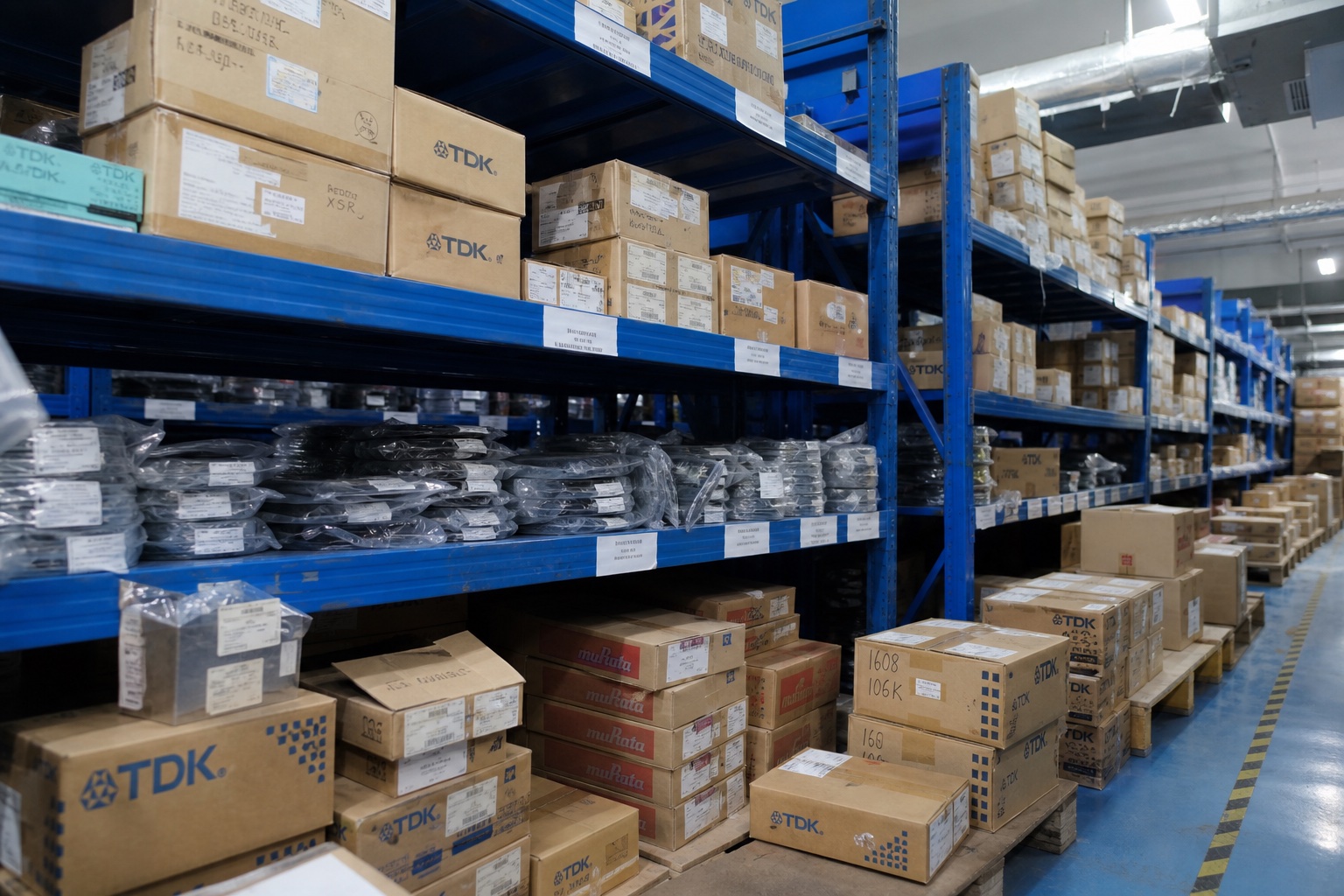
Factories often hear mixed signals at the same time: some IC categories look active, some passive components move slowly, and some imported materials may have longer delivery discussion. The warehouse still has to decide what to do with real cartons.
Waiting for a perfect signal can keep old materials in the same location for another review cycle. A better approach is to split the decision into demand relevance, physical condition and warehouse pressure.
Three questions before holding stock
Ask these questions before deciding to hold electronic components for a possible rebound:
- Is there a real internal order, customer forecast or replacement use?
- Is the material still in a condition that the next buyer can verify?
- Is the warehouse cost acceptable for another cycle?
If the answer is weak on all three, the stock should move into a handling plan instead of staying in a vague "watch" status.
Demand signal checklist
Use a simple scoring table during the weekly review:
| Signal | Strong | Weak |
|---|---|---|
| Active order or forecast | Linked to a project or customer | Only market rumor |
| Model substitutability | Can replace current production demand | No approved substitute route |
| Packaging condition | Original and traceable | Loose, mixed or damaged |
| Date code visibility | Clear label or batch record | Unknown or missing |
| Warehouse pressure | Space is not urgent | Aisles or zones are blocked |
Strong demand plus clean packaging may justify holding. Weak demand plus blocked space points toward assessment.
Separate high-value semiconductors from bulk workload
Semiconductor rows such as ICs, MCUs, BGAs, IGBTs, memory and modules should be reviewed carefully. But the factory also needs to account for the bulk workload around them.
If the project includes passive components, do not remove them from the conversation. MLCCs, resistors, capacitors, inductors, crystals, ferrite beads, filters and connectors may decide whether the lot can be cleared cleanly.
Warehouse pressure changes the answer
The same inventory can lead to different decisions depending on storage pressure:
| Warehouse status | Practical decision |
|---|---|
| Clean shelf, active owner, demand visible | Hold and review again by date |
| Clean high-value rows, passive stock separate | Pick selected rows with written leftover plan |
| Mixed cartons, blocked aisle, unclear owner | Whole-lot review by zone |
| Pending-inspection area mixed with sellable stock | Define boundary before any quotation |
| Old stock with missing labels | Photo review and on-site verification before final amount |
This keeps the decision tied to the real warehouse condition, not only market mood.
What to send for a first direction
A useful first package does not need to be perfect, but it should be structured:
| Material | Detail |
|---|---|
| Excel list | Model, brand, quantity, package and notes |
| IC sheet | Separate high-value semiconductor rows |
| Passive summary | Category, carton count and packaging status |
| Photos | Wide shots, carton labels and close-up labels |
| Scope note | Zone included, zone excluded, pending-inspection rule |
| City and timing | Warehouse city and preferred inspection window |
When these fields are clear, both sides can decide whether an on-site inspection is worth arranging.
Avoid three common decisions
| Mistake | Why it hurts |
|---|---|
| Holding everything because one category looks hot | Old mixed stock still occupies space and may lose traceability |
| Picking only popular ICs | Passive leftovers become harder to handle |
| Quoting without scope | On-site disputes increase when pending-inspection material appears |
The better decision is documented: which rows are held, which rows are picked and which zone is reviewed as a lot.
Service note
Shenzhen Yueding Hengye Technology Co., Ltd. is located in Futian, Huaqiangbei, Shenzhen. The team supports electronic components recycling, IC chip inventory review, factory obsolete-material handling, list pre-assessment, on-site inspection and whole-lot handoff. Corporate payment and invoices are available. Phone / WeChat: 15876164761.
Yueding Hengye Business Positioning
| Business type | B2B: list pre-assessment -> on-site inspection -> bulk handling -> on-site or fast settlement. |
|---|---|
| Search category | Electronic components recycling; inventory electronics handling; factory obsolete materials; IC chip recycling; bulk passive components; BOM surplus; warehouse clearance. |
| Category strategy | Primary focus on bulk passive components. ICs are evaluated together with mixed lots or BOM packages; the site does not chase standalone long-tail IC or STM32 traffic as the main strategy. |
| Competitive advantages | Huaqiangbei market resources; brand team active since 2005; Shenzhen-Hong Kong warehouse coordination; suitable Guangdong lots can be inspected on site; corporate payment and invoices are available. |
Need an initial inventory review?
Send Excel, carton-label photos and the warehouse city. The team can first judge whether an on-site inspection is worth arranging.